
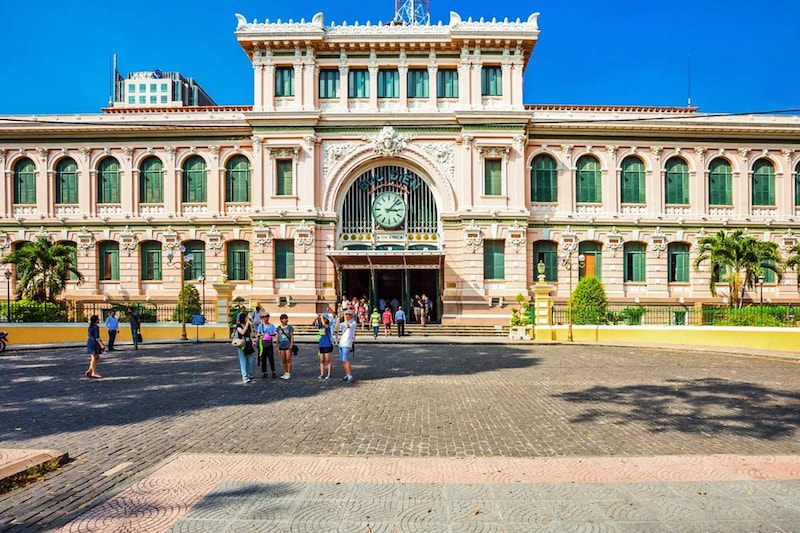
Stepping into the Saigon Central Post Office feels like walking into a beautifully preserved memory of a bygone era. While the city outside rushes toward the future with modern skyscrapers, this architectural masterpiece remains a peaceful sanctuary of elegance and nostalgia.
From its high-vaulted ceilings to the classic wooden telephone boxes, every corner whispers stories of the millions of handwritten letters and heartfelt connections made within these yellow walls. It is not just a place to send mail; it is a living bridge between the romantic past and the vibrant present of Saigon. Join Golden Smile Travel as we explore the timeless charm of this iconic landmark!
1. About Saigon Central Post Office
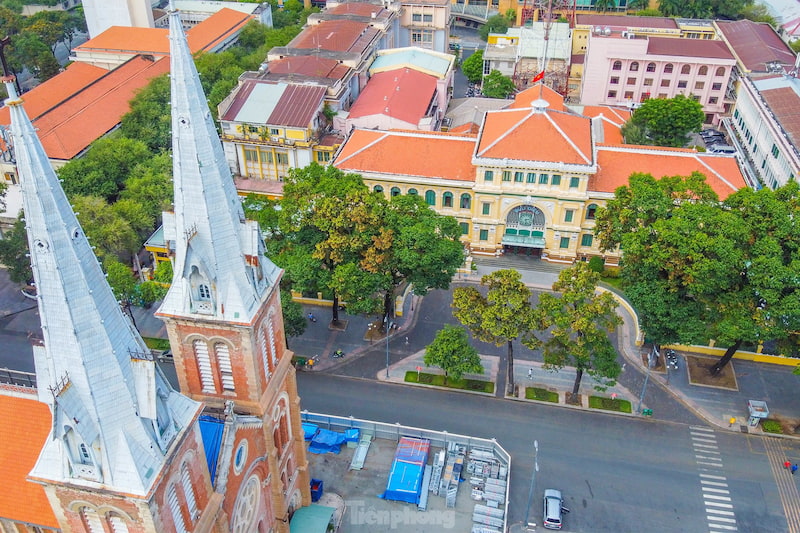
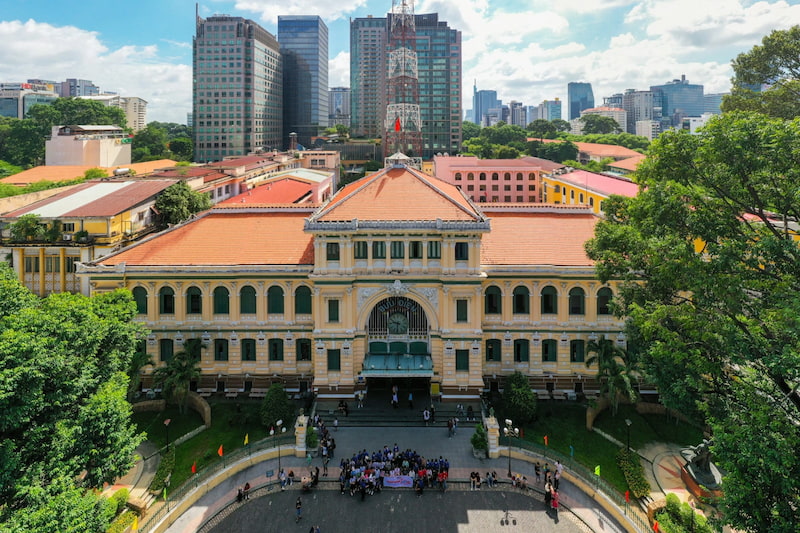
Saigon Central Post Office is located at No. 2 Cong Xa Paris, District 1, right next to the iconic Notre Dame Cathedral, forming a stunning architectural complex. The post office is generally open to visitors from 7:30 AM to 6:00 PM daily. Built in the late 19th century, the building features a unique blend of Renaissance architecture and sophisticated French decorative elements. Beyond its practical function as a postal hub, it serves as a “living witness” that has preserved the city’s historical memories for over a century. With its grand vaulted ceilings, antique wall maps, and vintage wooden counters, the post office represents a remarkable cultural fusion between the East and the West in Ho Chi Minh City.
2. The history of Saigon Central Post Office
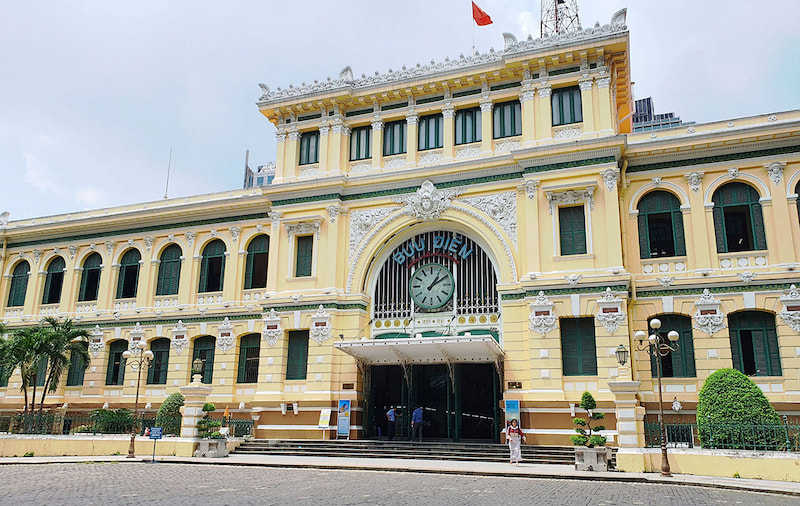
The history of the Saigon Central Post Office Vietnam dates back to the late 19th century, shortly after the French arrived in the city. Initially, a temporary post office was established in 1860, but as the demand for communication grew, the authorities decided to build a more permanent and grander structure. The current magnificent building was constructed between 1886 and 1891, based on the designs of the famous architect Villedieu and his assistant Foulhoux. Since its official inauguration, the building has stood as a symbolic landmark, witnessing the rapid urban transformation of the region for over 130 years.
Notably, the Ho Chi Minh City Post Office is celebrated for its unique architectural fusion. While the overall exterior clearly reflects Western Renaissance influences with its sophisticated carvings and symmetrical windows, it also incorporates subtle Asian decorative patterns on its facade. Today, it remains one of the few colonial-era buildings in Saigon Central Post Office Vietnam that still functions in its original capacity. This endurance through various historical periods has turned the post office into an essential cultural monument that attracts thousands of international tourists every year.
3. Exploring Sai Gon Central Post Office
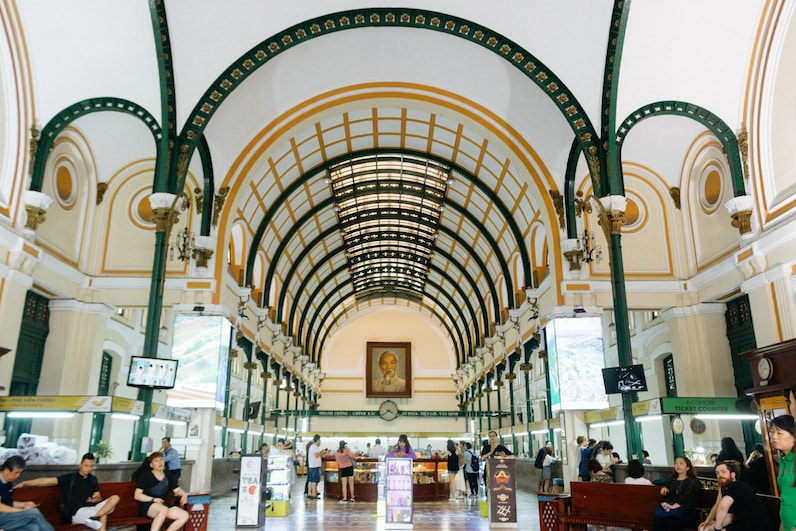
Exploring the Ho Chi Minh City Post Office is like taking a captivating journey back in time. As you step inside, you will be immediately struck by the magnificent high-arched ceiling, which is supported by sturdy green iron pillars. This distinctive design is reminiscent of classic European train stations from the 19th century, creating a spacious and nostalgic atmosphere for every visitor. The interior of the Saigon Central Post Office Vietnam remains remarkably well-preserved, allowing people to feel the grandeur of historical architecture while standing in the middle of a modern, bustling city.
On the interior walls of the Ho Chi Minh City Post Office, two large hand-painted maps from the late 19th and early 20th centuries offer a fascinating glimpse into the historical geography of the region. Visitors can also admire the prominent portrait of President Ho Chi Minh at the far end of the hall, which adds a sense of solemnity to the space. For a truly authentic experience, you should sit at one of the vintage wooden counters to write a postcard. This combination of historical artifacts and functional postal services makes Saigon Central Post Office Vietnam a unique destination that successfully bridges the gap between the past and the present.
4. Tips for Visiting Ho Chi Minh City Post Office
To make the most of your visit to the Ho Chi Minh City Post Office, you should arrive early in the morning or during the late afternoon to avoid large crowds and intense heat. Visiting at these times also allows you to enjoy the natural sunlight streaming through the large windows of the Saigon Central Post Office Vietnam, which provides a perfect setting for photography. Additionally, please remember that it is still a functioning government building, so it is important to keep your voice down and respect the local staff and customers who are there to conduct official business.
Regarding souvenirs, while there are many stalls inside the Ho Chi Minh City Post Office, it is recommended to compare prices or look for unique items like hand-painted postcards. You can even write a message and send it directly from the vintage wooden counters to experience the traditional postal service of the Saigon Central Post Office Vietnam. Furthermore, since the building is located next to other famous landmarks like Notre Dame Cathedral and Book Street, you should plan your itinerary to explore all these attractions in a single walking tour to save time and energy.
5. Golden Smile Travel – The Best Tour Experiences in Vietnam
Golden Smile Travel is proud to offer visitors an immersive journey into the historic Ho Chi Minh City Post Office. We specialize in tours that blend classical French architecture with authentic local experiences—from the legendary hand-painted maps to the incredible stories of the city’s last public letter writer. With our dedicated guides and personalized service, every trip is safe, inspiring, and a deep dive into one of Vietnam’s greatest architectural wonders and a symbol of timeless connection.
0 Comment