
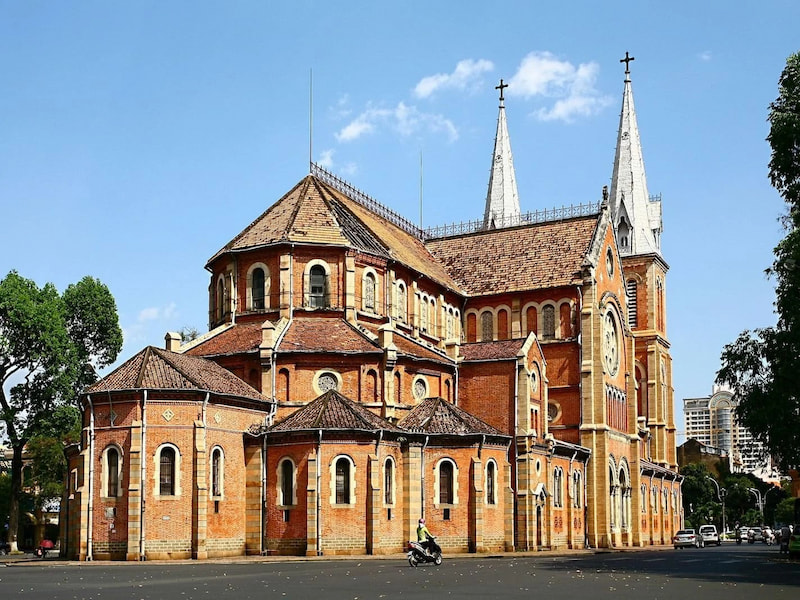
Standing as a serene witness to the changing tides of history, the Notre-Dame Cathedral Basilica of Saigon is the quiet, elegant soul of District 1. While the city around it reaches for the stars with modern glass towers, this architectural masterpiece remains a steady symbol of peace and timeless beauty.
With its iconic twin bell towers and classic red-brick facade, the cathedral offers a breathtaking moment of reflection amidst the busy streets of Saigon. It is not just a place of worship; it is a cultural treasure that captures the romantic heart of the city’s heritage. Let Golden Smile Travel guide you to this magnificent landmark and discover why its charm never fades!
1. About Notre Dame Cathedral Basilica Of Saigon
1.1 The Architectural Grandeur and Exterior Beauty
Visitors are often mesmerized by the cathedral’s impressive Romanesque facade and its symmetrical twin bell towers that reach high into the sky. The meticulous arrangement of the imported red bricks from Marseille creates a warm and ancient glow that shines brilliantly under the tropical sunlight. Every decorative detail on the exterior walls reflects the sophisticated craftsmanship and artistic vision of the late nineteenth-century French architects who built it. Surrounding the building is a spacious and airy square, which serves as a popular gathering spot for locals to enjoy the fresh city air. This outdoor area provides a perfect perspective for photographers and artists to capture the timeless elegance and historical charm of the city’s heart.
1.2. The Artistic Interior and Spiritual Atmosphere
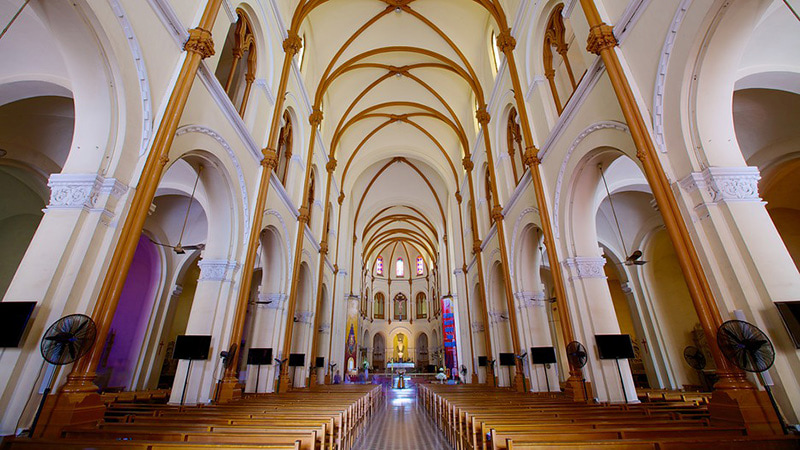
Stepping inside, the vast and solemn space is beautifully illuminated by a series of stunning stained-glass windows depicting various significant religious stories. The high vaulted ceilings and sturdy stone pillars create a powerful sense of peace and tranquility for all worshippers and curious travelers alike. Many delicate statues and intricate wood carvings are carefully arranged along the side aisles to honor the long-standing traditions of the Christian faith. Sunlight filtering through the colorful glass creates a magical and multi-colored atmosphere that significantly enhances the spiritual experience for everyone entering the hall. Despite being located right next to the busy and noisy streets, the interior remains remarkably quiet, offering a perfect sanctuary for meditation.
1.3. A Lasting Symbol of Cultural Heritage
Today, the cathedral stands as an irreplaceable and majestic landmark that clearly defines the unique cultural identity of modern Ho Chi Minh City. It successfully bridges the gap between the historical colonial era and the dynamic, fast-paced development of a growing Vietnamese international metropolis. Local residents take great pride in this heritage site, as it represents resilience and stability through many different periods of national change. Educational tours often visit these historical grounds to help young students appreciate the harmonious blend of European art and Vietnamese social history. Preserving the integrity of this basilica ensures that the city’s architectural soul remains intact for many future generations to study and admire.
2. Notre-Dame Cathedral’s history
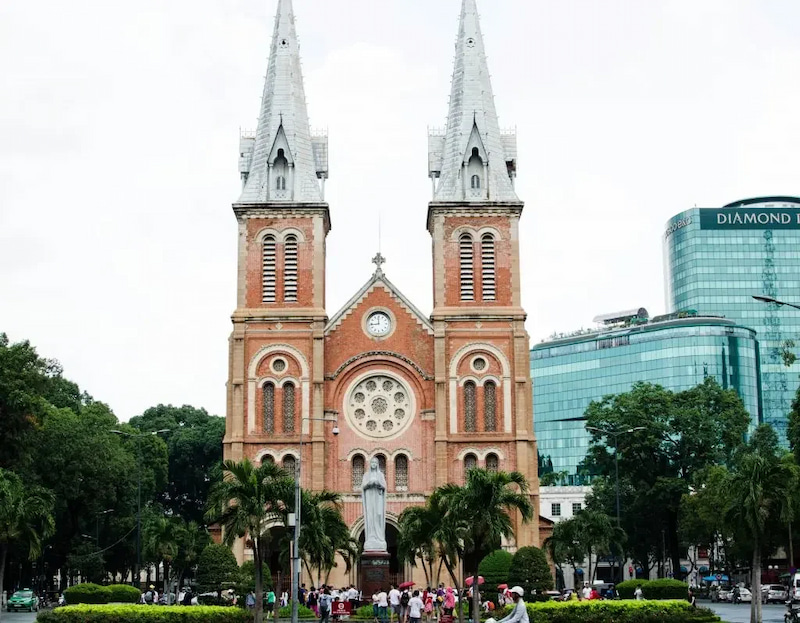
The Construction Phase of Saigon Notre-Dame Cathedral began in 1877 and was remarkably completed in just three years of intensive work. All building materials, from the distinctive red bricks to the steel frame, were imported directly from Marseille, France to ensure quality. Architect J. Bourard designed the building in a Romanesque style, creating a majestic and grand landmark in the heart of the city. A unique feature of the structure is its exterior bricks, which have maintained their bright red color without any moss for decades. By 1880, the cathedral was officially inaugurated, becoming the most significant and iconic religious symbol for the people of Indochina.
Historical Milestones and Expansion In 1895, the structure was significantly enhanced with two massive bell towers standing 57 meters high, housing six heavy bronze bells. These towers transformed the cathedral into a dominant landmark of the city’s skyline, which was visible from far away during that era. Throughout the 20th century, the building survived many historical upheavals, witnessing the transformation of Saigon from a colonial town into a modern city. In 1959, the famous statue of Our Lady of Peace was installed in the front park, adding even more spiritual value to the site. In 1962, the Vatican officially elevated its status to a Basilica, recognizing its great historical and religious significance to the region.
Modern Preservation and Cultural Value After more than 140 years of existence, the cathedral is currently undergoing a major restoration project to preserve its overall structural integrity. Experts are carefully replacing damaged roof tiles and cleaning the exterior walls using specialized techniques to maintain the building’s original beauty. Despite the ongoing construction work, the site remains a top destination for international tourists and local people for religious and social gatherings. It stands not only as a place of worship but also as an architectural soul that effectively connects the past with the present. Protecting this historic monument ensures that future generations can continue to appreciate its unique heritage and deep cultural meaning
3. Visit the architecture of the Notre Dame Cathedral in Vietnam
3.1 Origins and the Elaborate Construction Process
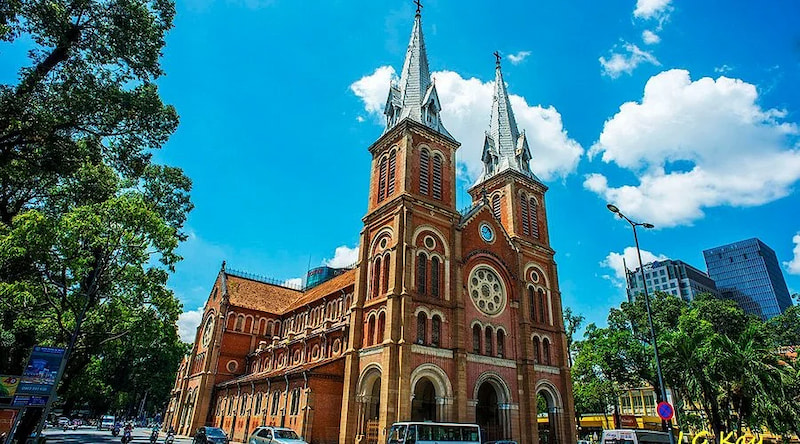
The construction of Notre-Dame Cathedral Basilica of Saigon began in 1877 and was remarkably completed in just three years of intensive work. All building materials, including red bricks and steel, were imported directly from France to ensure the highest quality. Architect J. Bourard designed the structure in a Romanesque style blended with impressive Gothic elements for a unique look. A standout feature is the bright red exterior bricks, which have maintained their vibrant color without any moss for decades. In 1880, the cathedral was officially inaugurated, becoming the largest and most significant religious symbol in all of Indochina.
3.2 Architectural Features and Historical Significance
Two massive bell towers standing 57 meters high with six heavy bronze bells were added to the structure in 1895. In front of the cathedral lies a peaceful park featuring the famous white marble statue of Regina Pacis, or Our Lady of Peace. The interior is decorated with beautiful stained-glass windows and delicate carvings that perfectly reflect the elegance of Western art. Throughout its history, the basilica has witnessed many major historical changes in Saigon from the colonial era to the present day. In 1962, the Vatican officially elevated its status to a Basilica, marking its great spiritual importance to the local community.
3. Preservation Efforts and Modern Cultural Value
After over 140 years of existence, the cathedral has been undergoing a massive and careful renovation project since 2017. To maintain the original design, experts have imported specialized tiles and construction materials from overseas to replace damaged parts. Despite the ongoing repairs, it remains an essential destination for international tourists and local photography lovers visiting the city center. The cathedral is not only a place of worship but also functions as the architectural soul of the modern city. Preserving this landmark helps protect precious historical values and effectively connects younger generations to their local cultural heritage.
4. Golden Smile Travel – The Best Tour Experiences in Vietnam
Golden Smile Travel is proud to offer visitors an immersive journey into the historic Notre Dame Cathedral Basilica of Saigon. We specialize in tours that blend centuries-old Romanesque architecture with the soulful atmosphere of old Saigon—from the iconic red bricks of Marseille to the serene beauty of the Virgin Mary statue. With our dedicated guides and personalized service, every trip is a safe, inspiring, and a deep dive into one of Vietnam’s greatest architectural wonders in the heart of the city.
0 Comment