
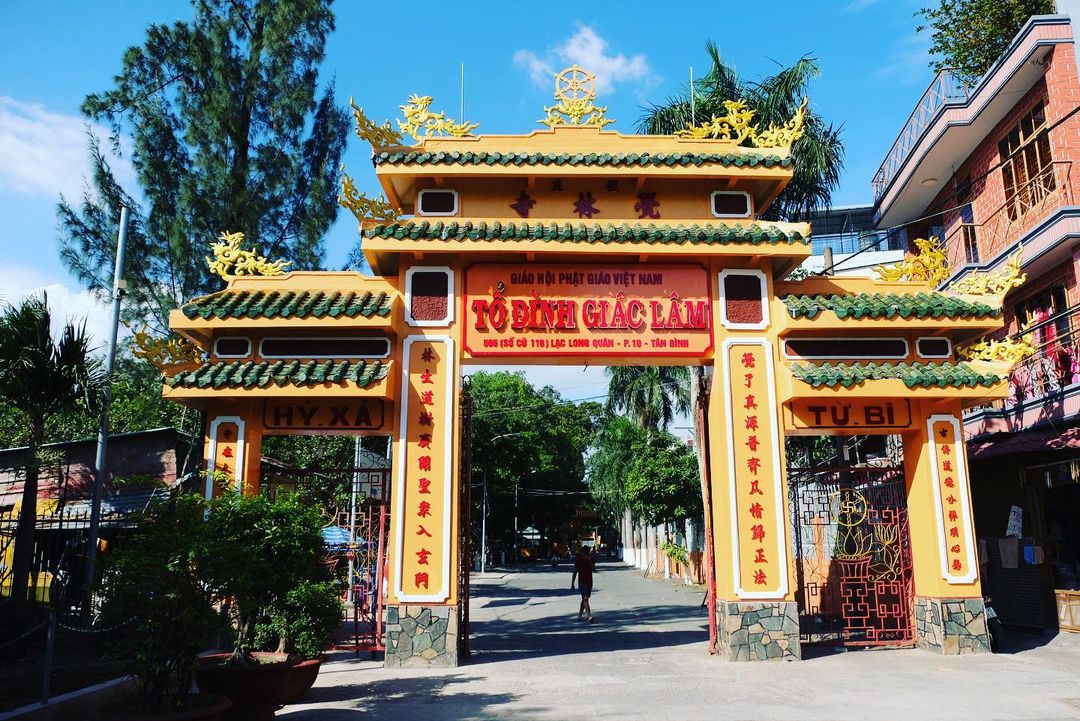
Giac Lam Pagoda is widely regarded as one of the most serene and prominent spiritual landmarks in Ho Chi Minh City, standing out with its expansive, garden-style layout and traditional southern architectural charm. For travelers seeking a peaceful sanctuary to admire ancient art and find inner balance, Giac Lam Pagoda is a must-visit destination on any journey through Saigon’s cultural landscape.
1. About Giac Lam Pagoda
Giac Lam Pagoda, also known as To Dinh Giac Lam, is located at 565 Lac Long Quan Street, Ward 10, Tan Binh District, Ho Chi Minh City. Visitors can explore daily during its opening hours from 7:00 AM to 9:00 PM, with no entrance fee required. As the oldest temple in Saigon with over 280 years of history, Giac Lam Pagoda holds immense significance as a National Historical-Cultural Relic, preserving priceless architectural values and ancient Buddhist statues.
2. History of Giac Lam Pagoda
The story of Giac Lam Pagoda began in the spring of 1744 during the reign of Lord Nguyen Phuc Khoat. Originally built by a lay Buddhist named Ly Thuy Long, the site was initially known by various names such as Cam Son or Cam Dem before becoming the spiritual landmark it is today.
In 1774, Zen Master Vien Quang renamed the sanctuary to Giac Lam Pagoda, transforming it into a leading Buddhist center in Southern Vietnam. Over the following decades, the temple underwent major restorations to expand its scale, further solidifying its reputation as a hub for religious activities and pilgrims.
Throughout the 20th century, Giac Lam Pagoda played a silent but vital role in history, even serving as a secret shelter for revolutionaries during the 1940s. Its immense cultural and spiritual value was officially recognized on November 16, 1988, when the site was designated as a National Historical – Cultural Relic.
3. Visit the unique architecture of Giac Lam Pagoda
3.1. Traditional Southern Layout and Distinctive Roof
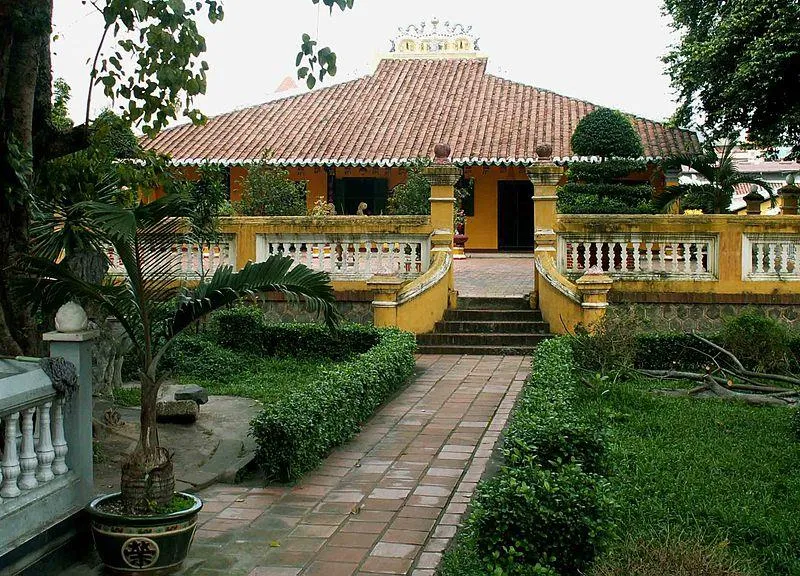
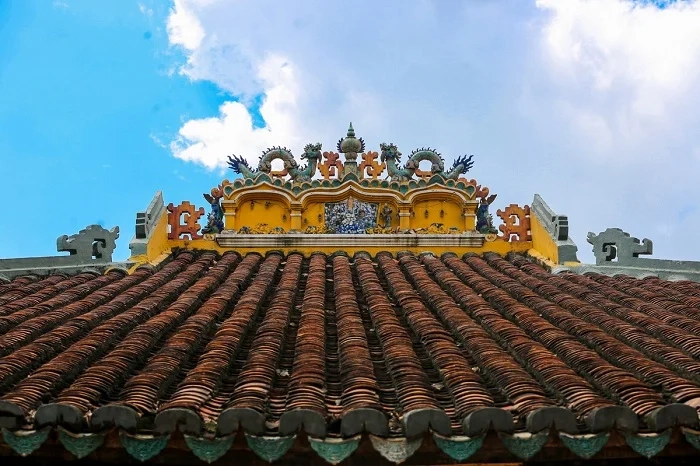
Giac Lam Pagoda is a prime example of the “Tam” (triple) character layout typical of Southern Vietnamese temples. The structure consists of three interconnected horizontal buildings: the Main Hall, the Lecture Hall, and the Dining Hall. A charming feature of Giac Lam Pagoda is its “Banh It” shaped roof—a rustic, four-slanted design that lacks the upturned corners of Northern temples, topped with a majestic “Two Dragons Fighting for a Pearl” ornament.
3.2. The Grand Entrance Gates
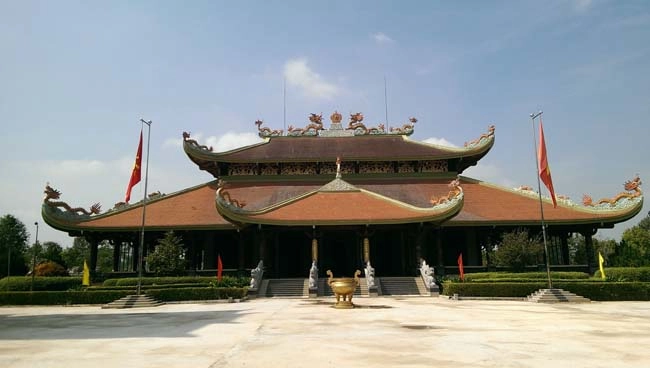
Visitors entering Giac Lam Pagoda will encounter two significant gates built at different times. The massive Nhi Quan Gate (built in 1945) showcases a unique blend of cultures, featuring Indian-style guardian lions and Khmer-style Naga snake heads. Meanwhile, the Tam Quan Gate (added in 1955) stands closer to the main road, adorned with intricate Han character couplets that warmly welcome pilgrims to the heart of the sanctuary.
3.3. The Majestic Main Sanctuary
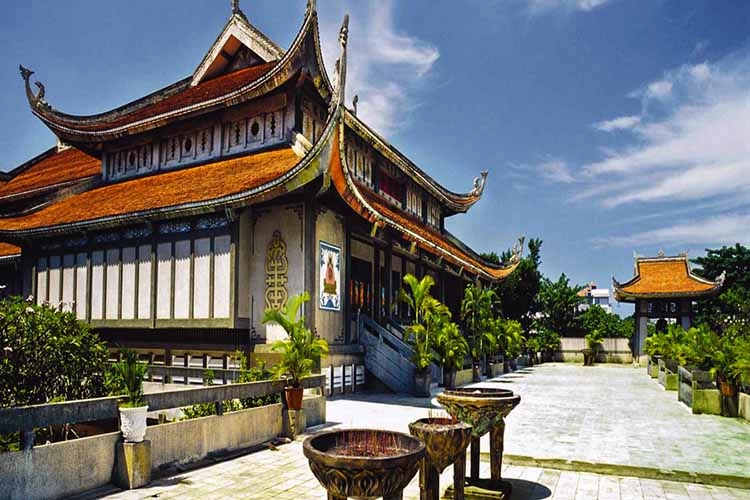
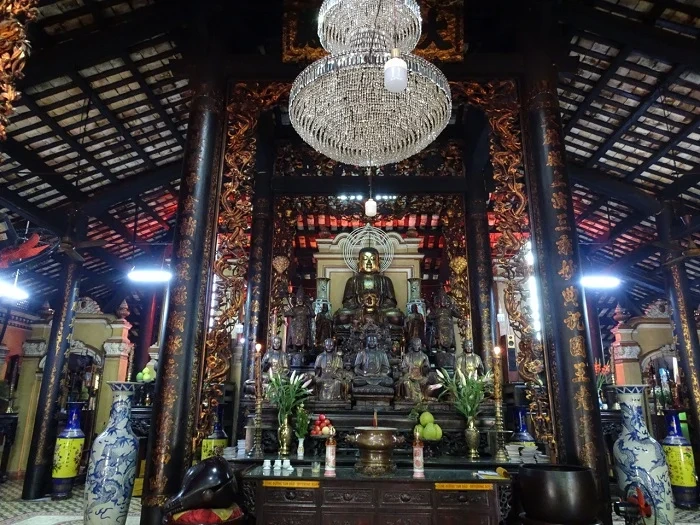
The Main Sanctuary of Giac Lam Pagoda is built in a traditional “one room, two wings” style with four main pillars called the “four pillars,” arranged in the layout of “worshipping Buddha in front, Ancestors behind.”
- System of over 56 large pillars: There are 56 dark brown pillars, larger than an arm’s embrace. Elaborate couplets are carved on the pillars.
- Buddha Altar: The solemn altar consists of three tables arranged from high (inner) to low (outer): the Amitabha table, the Council table, and the Triple Gem table.
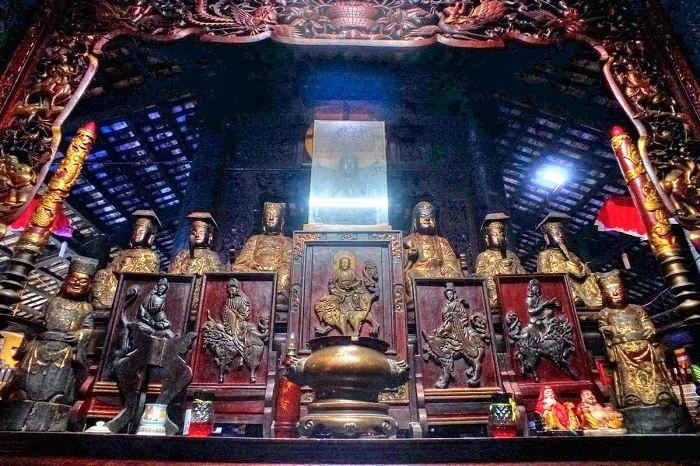
- Amitabha Table: Displays the Amitabha Triad horizontally. Vertically, there are statues of the Three-Period Buddhas including Shakyamuni, Kassapa, Ananda, and Maitreya. Flanking the Nine Dragons altar and the statue of Baby Shakyamuni are two Dharma Protectors representing good and evil.
- Council Table: Dedicated to the Jade Emperor, Nam Tao (Southern Star), and Bac Dau (Northern Star).
- Triple Gem Table: Placed at the lowest part of the main hall, featuring statues of Shakyamuni Buddha and four Bodhisattvas.
- Over 6,000 decorative plates on the wall tops: The most unique feature at Giac Lam Pagoda is the top of the main sanctuary walls, which has more than 6,000 decorative plates. These plates were mainly fired in the Lai Thieu kilns in Binh Duong province; additionally, some plates originated from Japan and China. With more than 7,000 plates in total, Giac Lam Pagoda currently holds the record for “the temple with the largest number of decorative ceramic plates in Vietnam.”
3.5. The Ancestor Hall and Lecture Hall
Located behind the main altar of Giac Lam Pagoda is the Ancestor Hall, dedicated to the late head monks who led the temple. Further back is the spacious Lecture Hall, which historically served as a secret shelter for revolutionary cadres during the resistance wars. Today, this area remains a vital space for major Buddhist ceremonies and spiritual gatherings at Giac Lam Pagoda.
4. Interesting experience at Giac Lam Pagoda
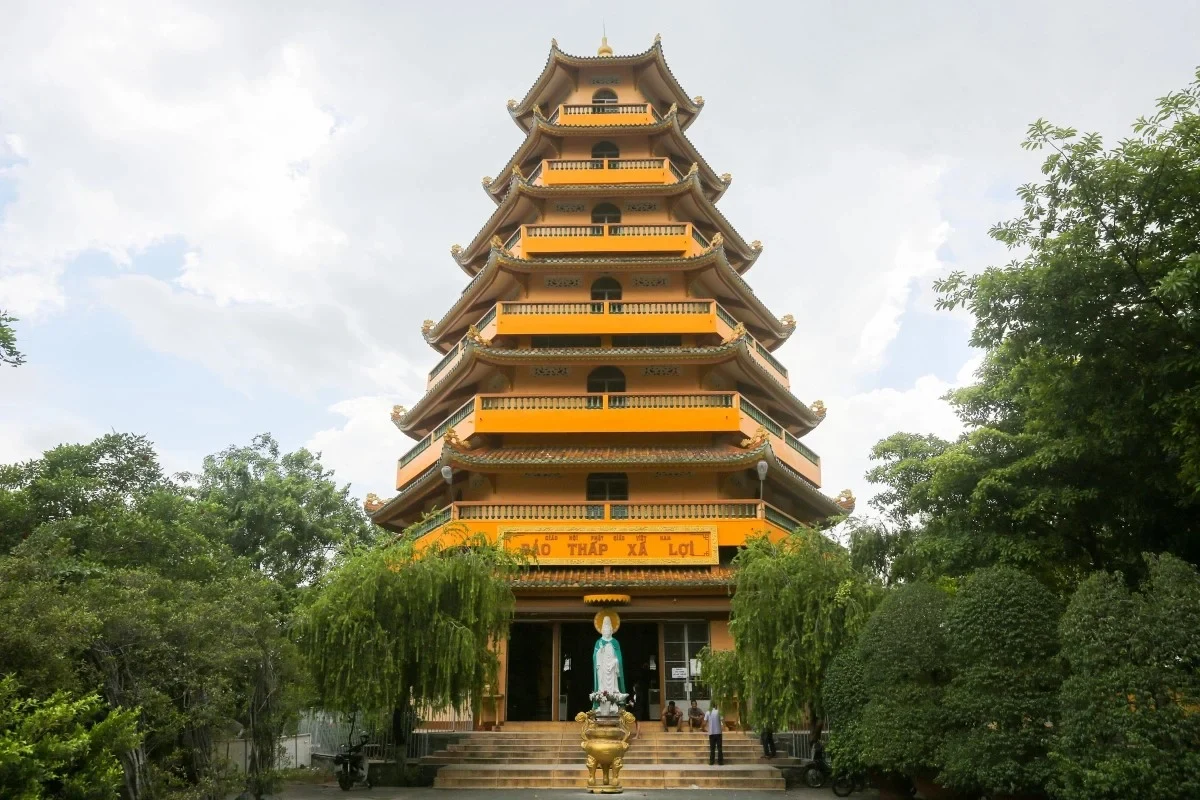
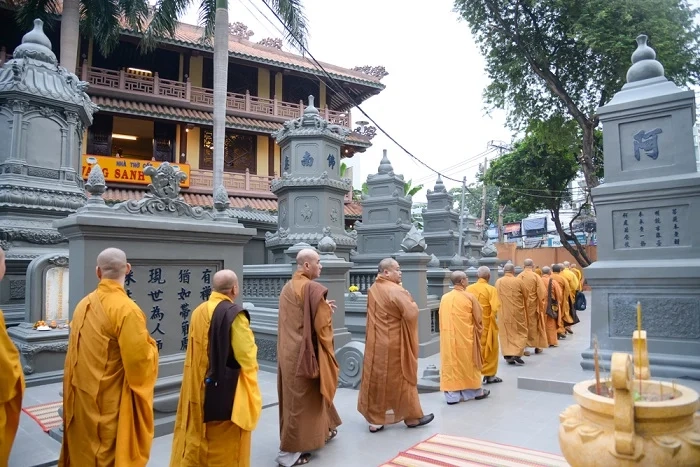
Visiting Giac Lam Pagoda offers a chance to admire the Xa Loi Stupa and three ancient tomb areas where late monks are laid to rest. The temple also houses numerous precious artifacts and statues that have been preserved for centuries, reflecting the profound artistic heritage of Giac Lam Pagoda.
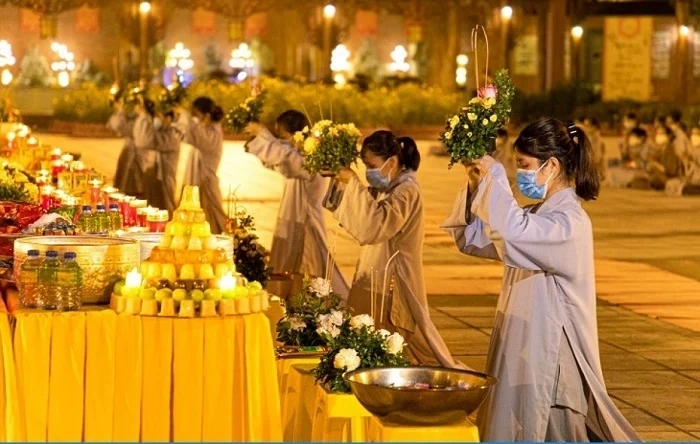
On special occasions like the Lunar New Year, Full Moon of July, or the Vu Lan Festival, Giac Lam Pagoda becomes a vibrant pilgrimage site. Visitors can join thousands of Buddhists to pray for peace, seek luck through calligraphy, or even consult auspicious dates for weddings at this sacred sanctuary.
For those seeking inner peace, Giac Lam Pagoda also organizes meditation retreats and Dharma talks. Participating in these activities allows practitioners to cultivate patience and gain a deeper understanding of Buddhist philosophy in a serene, ancient atmosphere.
5. Notes When Visiting Giac Lam Pagoda
For a truly immersive cultural experience, you should visit Giac Lam Pagoda during major festivals such as Vesak or the Vu Lan Ceremony.
As Giac Lam Pagoda is a solemn place of worship, please remember to dress modestly and speak softly to maintain the temple’s tranquility. If you wish to make offerings at Giac Lam Pagoda, you may prepare simple ceremonial gifts based on your sincerity and heart.
To preserve the beauty of Giac Lam Pagoda, please avoid littering in the courtyard and never climb on the statues when taking photos.
6. Golden Smile Travel – The Best Tour Experiences in Vietnam.
Golden Smile Travel is committed to bringing you the most authentic cultural journeys, including our specialized tours to the historic Giac Lam Pagoda. Our professional team ensures that every moment at Giac Lam Pagoda is not just a sightseeing trip, but a deep dive into the spiritual heritage of Saigon. Let Golden Smile Travel guide you through the ancient gates and deliver the best tour experiences in Vietnam.
0 Comment