
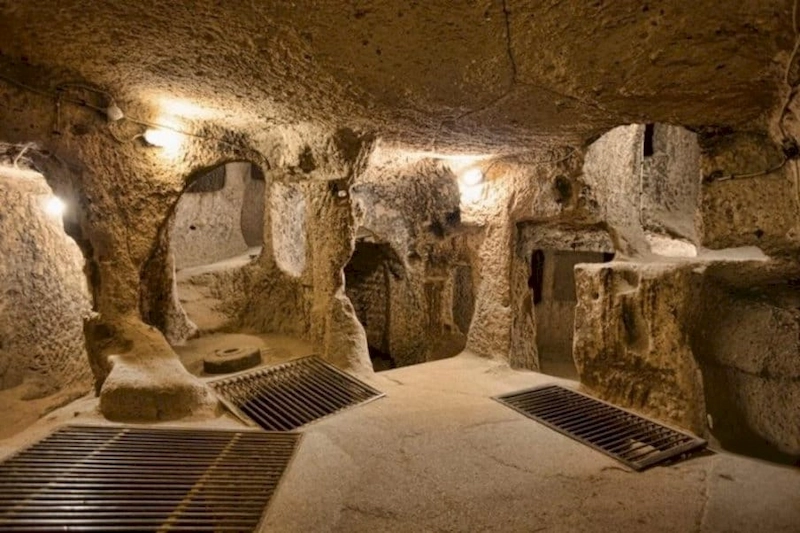
Cu Chi Tunnels in Ho Chi Minh City is one of Vietnam’s most iconic historical landmarks. Stretching over 250 kilometers in a complex underground network, this is a legendary symbol of Vietnamese determination and an unmissable spot for those seeking historical insights, remarkable architecture, and a touch of adventure. Let’s explore this historical site with Golden Smile Travel!
1. About Cu Chi Tunnels
1.1. Location:
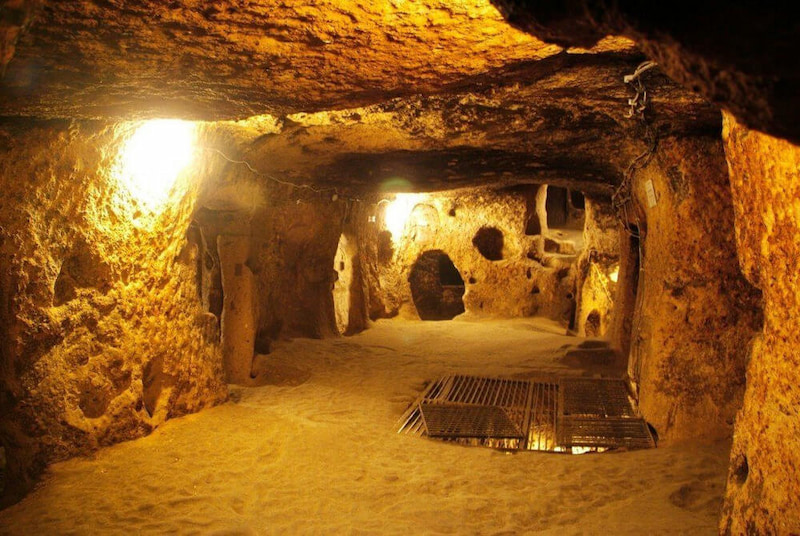
Cu Chi Tunnels, located in Phu My Hung Ward, Cu Chi District (about 70km from Ho Chi Minh City), is a legendary underground network where history, resilience, and ingenuity meet. Known as an “underground wonder,” this was once a vital shelter for the living and fighting of Vietnamese soldiers and civilians, featuring a complex system of kitchens, hospitals, living quarters, and booby traps.
Open daily from 7:00 AM to 5:00 PM, this historical landmark offers an unmissable experience for those seeking to explore the 250km-long tunnel system for an entrance fee of 135,000 VND. As a profound symbol of Vietnamese revolutionary heroism, the tunnels provide a unique touch of adventure and a deep insight into the country’s past.
1.2. Structure:
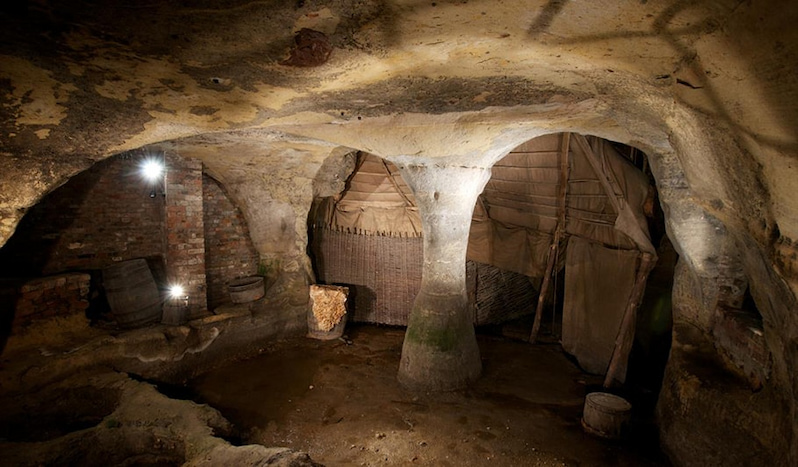
The Cu Chi Tunnels were excavated into a foundation of highly durable laterite clay, which prevented collapses and withstood the destructive force of even the largest bombs. The structure consists of three levels ranging from 3m to 12m deep underground, interconnected through a “backbone” axis and secret trapdoors cleverly disguised as termite mounds. Although the tunnels have limited height—only enough for a person to move in a crouched position—they possess a sophisticated ventilation system that ensures continuous airflow throughout.
1.3. Facilities and Life Inside:
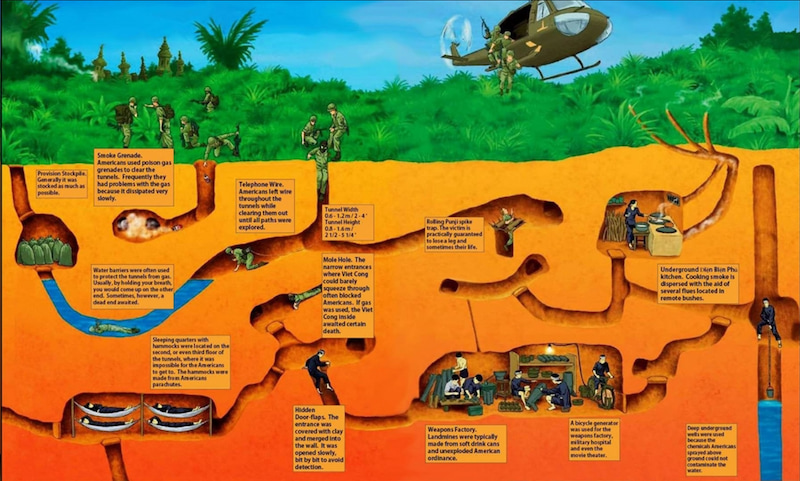
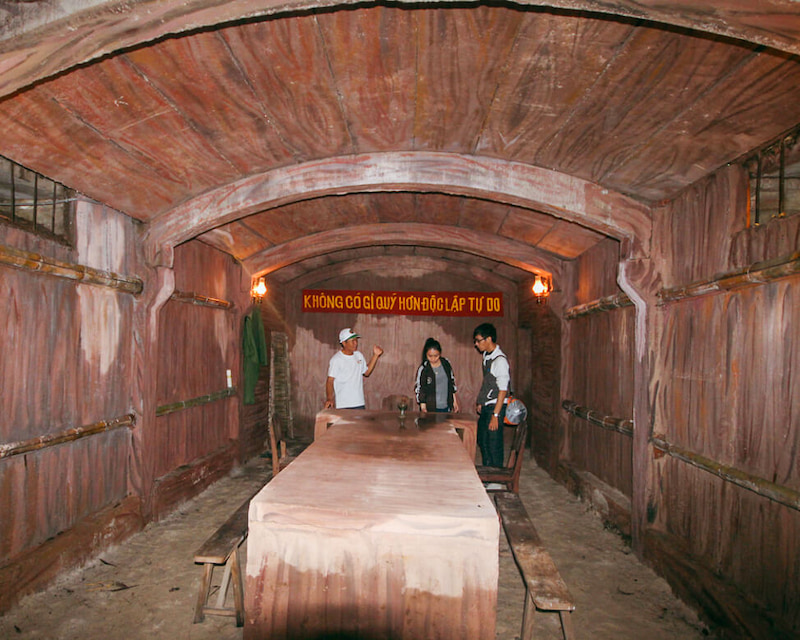
Inside the Cu Chi Tunnels is a continuous network fully equipped with functional areas for combat and daily life, such as command bunkers, surgical bunkers, weapon and food storage, and the Hoang Cam stove. Notably, the system also features underground wells and even large bunkers for cultural activities and movie screenings. Some branches of the tunnels even extend out to the Saigon River, creating a strategic and safe escape route for emergency situations.
2. History of Cu Chi Tunnels
2.1. Formation Period (1946 – 1948)
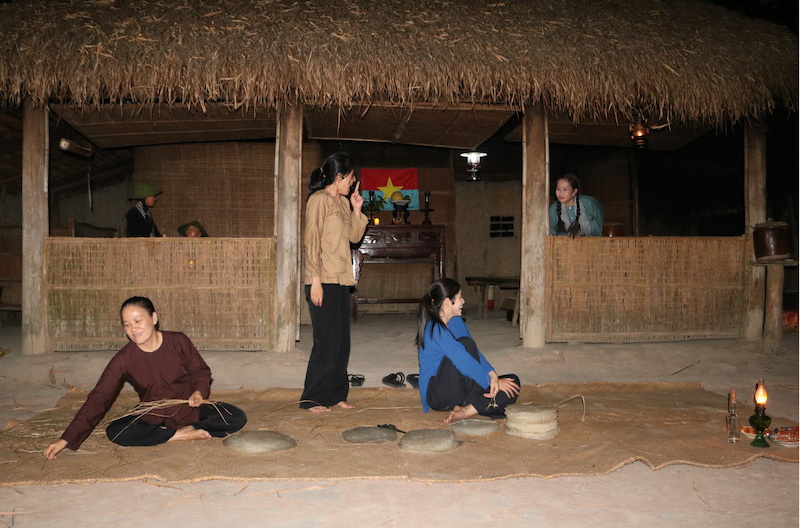
The Cu Chi Tunnels were initiated between 1946 and 1948, during the resistance war against the French colonialists. Initially, these were only individual secret bunkers in Tan Phu Trung and Phuoc Vinh An communes, dug to serve as shelters for officials and to hide documents and weapons.
Using simple tools like hoes and baskets, the locals took advantage of the durable “chicken fat” clay soil of this region to create short tunnel sections. At this stage, the tunnels were not yet interconnected on a large scale but primarily served the immediate hiding needs of local guerrilla forces.
2.2. Development into a Magnificent “Underground City”
Moving into the 1961 – 1967 period, in the face of the fierce escalation of the Vietnam War, the tunnels developed robustly into a continuous system spanning the northern communes of Cu Chi.
From fragmented sections, our soldiers and people interconnected them into a complex network stretching approximately 250km with a structure of three different depths, the deepest level reaching up to 12m underground. More than just a transportation route, Cu Chi Tunnels transformed into a true “underground city” fully equipped with functional areas such as meeting rooms, field hospitals, and food storage.
3. What’s Interesting to Discover at Cu Chi Tunnels?
3.1. The Claustrophobic “Crawl” Through History
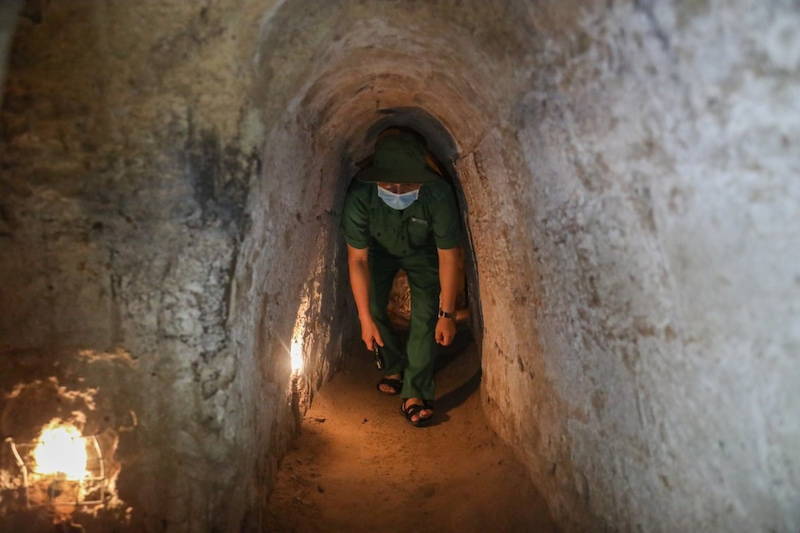
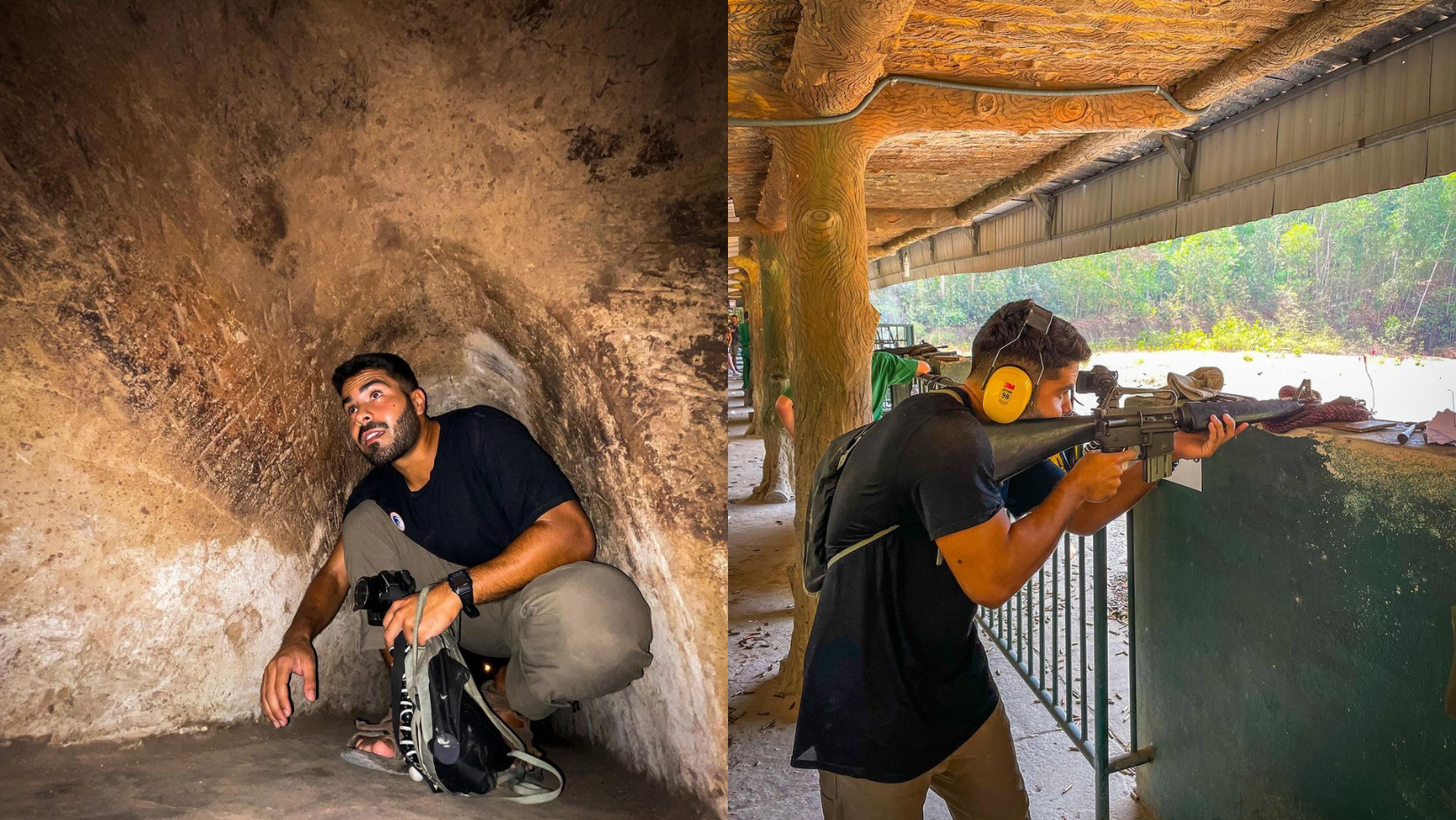
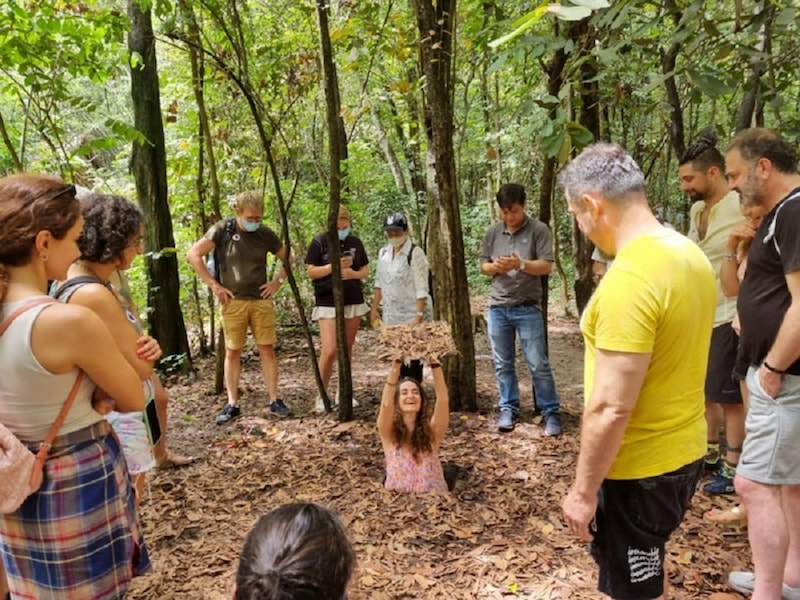
The most iconic experience at Cu Chi tunnels is actually entering the tunnels. While some sections have been widened for tourists, they remain narrow, dark, and humid, giving you a real sense of the extreme conditions soldiers faced.
3.2. Ingenious Traps and The “Invisible” Kitchen
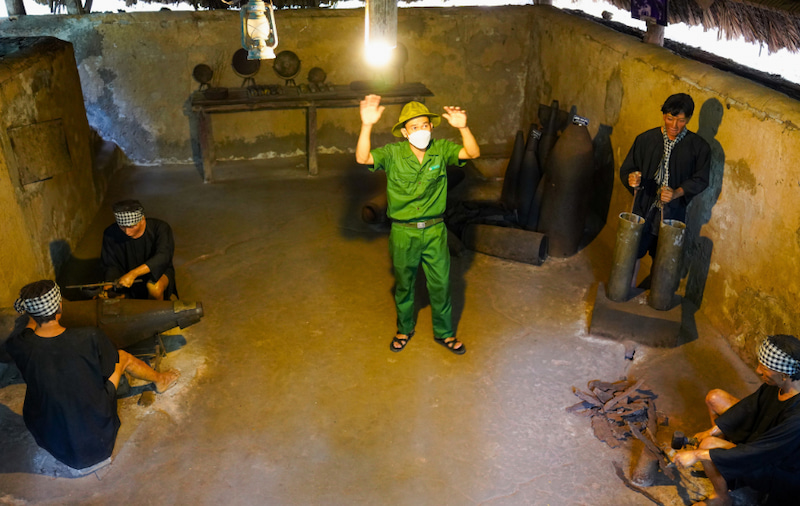
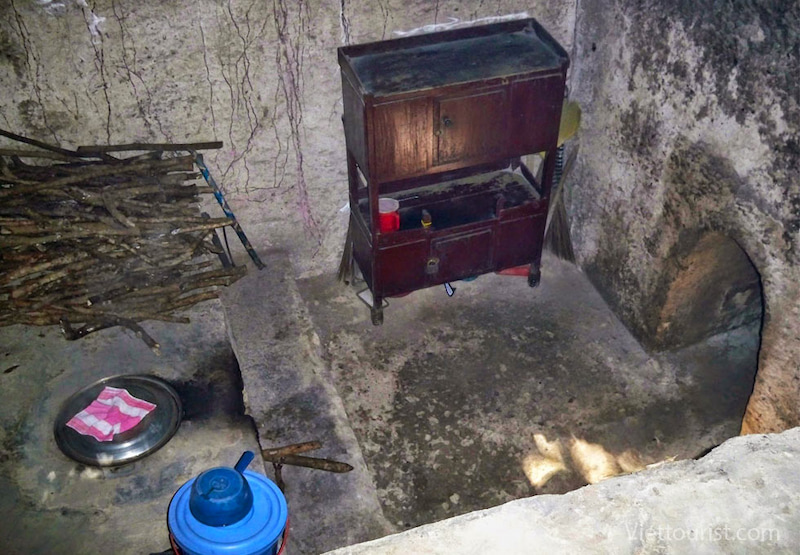
Visitors will be fascinated by the display of homemade booby traps and the famous Hoang Cam stove in Cu Chi Tunnels. These traps, often made from recycled war scrap and punji stakes, showcase the simple but deadly creativity of guerrilla warfare. Equally impressive is the “invisible” kitchen, which used a complex system of buried flues to disperse cooking smoke far away and close to the ground, mimicking morning mist to hide from enemy aerial surveillance.
3.3. A Taste of Wartime Survival
To complete your journey back in time at the Cu Chi Tunnels, enjoy a “war meal” of boiled cassava dipped in peanut salt in a communal hut. For those seeking more intensity, there is an optional firing range where you can try out authentic wartime weapons like the AK-47 or M16 under professional supervision.
4. What to eat when visiting the Cu Chi Tunnels?
Boiled Cassava with Peanut Salt
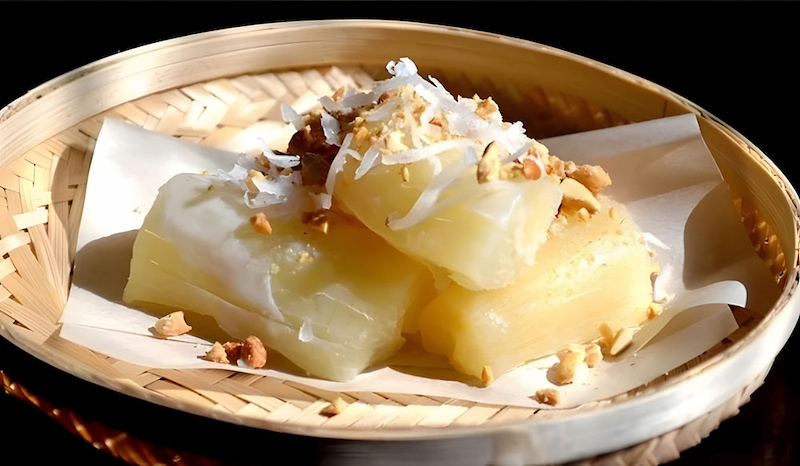
This is the most iconic food inseparable from the history of the Cu Chi Tunnels. During the war, when rice was scarce due to constant raids, cassava (tapioca) became the “life – saving” starch. Today, visitors are served steaming hot boiled cassava with a mix of crushed peanuts, salt, and sugar right at the end of the tunnel tour, recreating the exact meal that sustained the resistance for years.
Palmyra Sugar Cane Juice
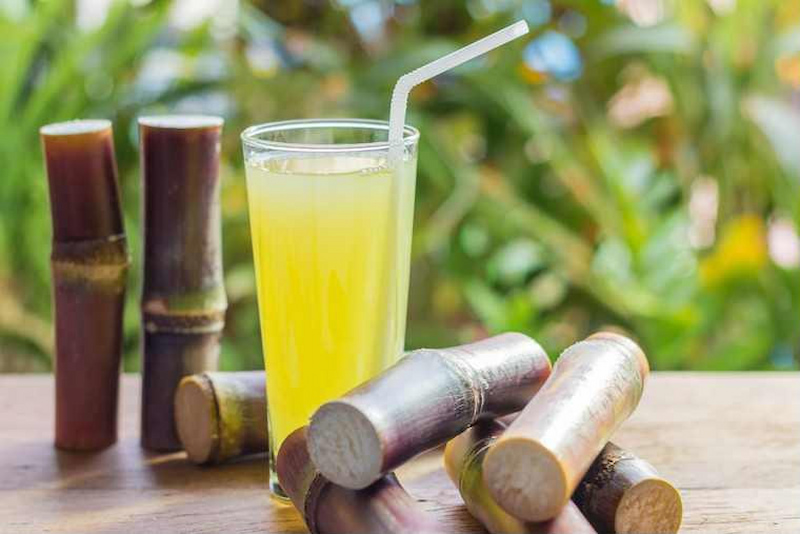
With prices starting at just 10,000 VND per cup, this refreshing drink is a local specialty you shouldn’t miss. These sugar cane stalls around the Cu Chi Tunnels stay open from morning until night, always ready to serve thirsty travelers.
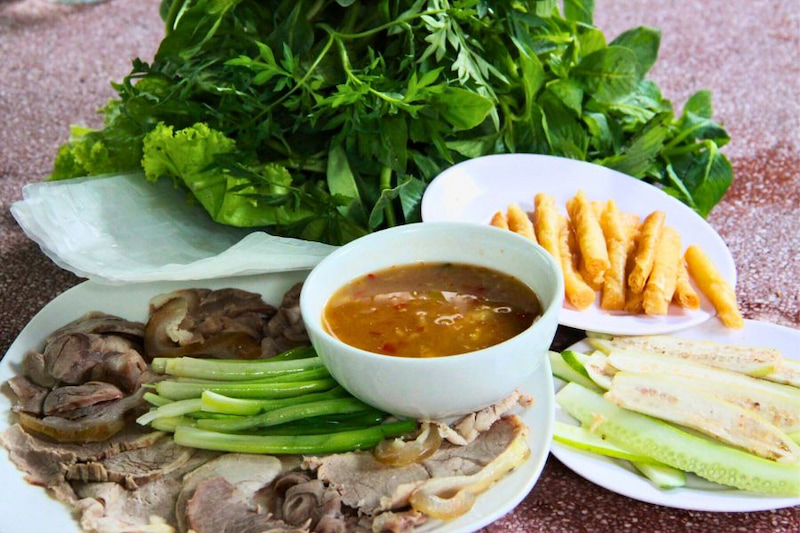
Cu Chi Rare Veal
Featuring exceptionally fresh and tender veal, you can easily find numerous local restaurants along the road leading to the Cu Chi Tunnels. These eateries offer a variety of specialized dishes, each prepared to highlight its own unique and savory flavor.
5. Notes When Visiting Cu Chi Tunnels
5.1. Dressing and Health
To ensure a comfortable trip to the Cu Chi Tunnels, you should wear dark-colored, athletic clothes and sturdy sneakers, as you will be walking in the jungle and crawling through narrow, dusty tunnels. Most importantly, if you have heart conditions, high blood pressure, or claustrophobia, it is best to stay above ground and view the exhibits instead of entering the deep underground sections.
5.2. Protection and Respect
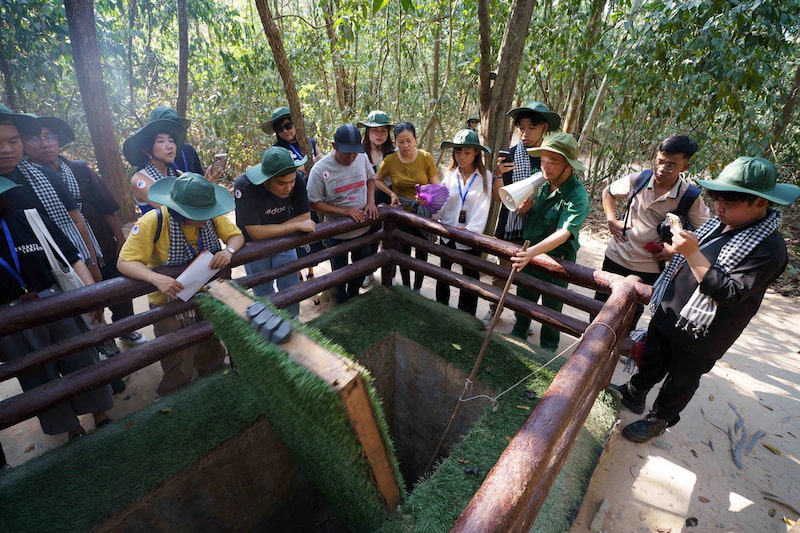
Since the Cu Chi Tunnels are located in a natural forest area, don’t forget to bring insect repellent to protect yourself from mosquitoes. As the Cu Chi Tunnels is a solemn historical site, please follow the designated paths, avoid touching fragile artifacts, and strictly adhere to safety rules if you visit the shooting range.
6. Golden Smile Travel – The Best Tour Experiences in Vietnam
Golden Smile Travel is proud to offer visitors an immersive journey into the historic Cu Chi Tunnels. We specialize in tours that blend heroic history with authentic local flavors—from the legendary boiled cassava to the incredible stories of resilience. With our dedicated guides and personalized service, every trip is safe, inspiring, and a deep dive into one of Vietnam’s greatest wonders.
0 Comment